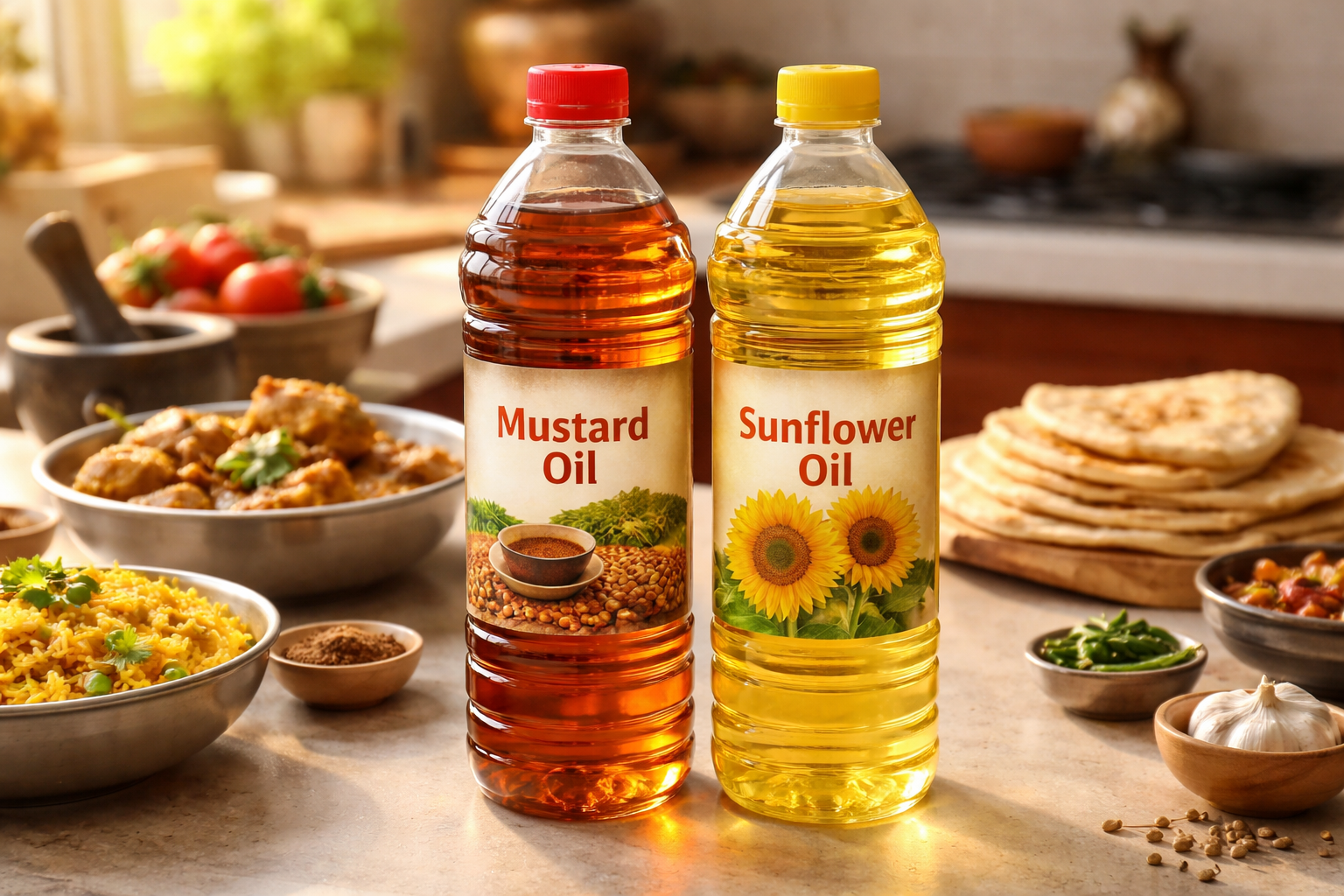
In most kitchens, cooking oil is treated as a basic ingredient that does not require much attention. It is often selected once and used for all types of cooking—whether it is frying, sautéing, or preparing daily meals. However, this approach can affect both the quality of cooking and the overall balance of your diet.If you observe closely, you may notice that the same dish does not always deliver consistent results. At times, the flavour may feel too strong, while in other cases it may seem too mild. Some meals may also feel heavier than expected, even when simple ingredients are used. These variations are often influenced by the type of oil used in the cooking process.This is where understanding mustard oil vs sunflower oil becomes important. Both oils are widely used and offer their own benefits, but they are not designed for identical purposes. Each oil has different properties in terms of heat stability, flavour impact, and nutritional composition. Let us get into a bit more detail.
Why Using the Same Cooking Oil for Every Dish Does Not Always Give the Best Results
Cooking methods vary from dish to dish. Some recipes require high heat, while others need a light and controlled temperature. Some dishes depend on strong flavours, while others are meant to taste simple and natural.When one type of oil is used for all these situations, it may not perform equally well in each case. A strong oil can overpower light dishes, while a mild oil may not support recipes that need depth and richness. Similarly, not all oils remain stable under high heat.For this reason, selecting the right oil should depend on how you cook, rather than using the same oil for convenience.
Mustard Oil vs Sunflower Oil: Understanding Their Differences in Everyday Cooking Situations
To make the right choice, it is useful to compare both oils based on practical cooking situations.
Taste and Aroma and Their Effect on the Final Outcome of the Dish
Mustard oil has a strong and sharp aroma that becomes part of the dish. It enhances the flavour of traditional recipes such as curries and pickles, where a bold taste is expected. In such cases, the oil supports the overall flavour of the dish.However, this strong taste may not be suitable for all types of cooking. In light or simple dishes, it can dominate the natural flavour of the ingredients.Sunflower oil has a neutral taste and does not interfere with the flavour of food. This makes it suitable for a wide range of dishes, especially those where the ingredients should remain the highlight.
Cooking Performance and Stability at Different Heat Levels
Mustard oil performs well at high temperatures. It remains stable during frying, sautéing, and longer cooking processes. This makes it a suitable choice for cooking methods that involve sustained heat.Sunflower oil is better suited for low to medium heat cooking. It works well for light frying and everyday cooking. However, repeated exposure to high heat can reduce its quality over time, which makes it less suitable for frequent deep frying.
Nutritional Composition and Its Role in Maintaining a Balanced Diet
Mustard oil contains a higher proportion of monounsaturated fats along with some omega-3 fatty acids. This combination helps support a balanced intake of fats and contributes to better heart health when used in appropriate amounts.Sunflower oil contains polyunsaturated fats, mainly omega-6 fatty acids. These fats are important for the body, but excessive intake without sufficient omega-3 can lead to an imbalance over time.This highlights the importance of not relying on a single oil for all cooking needs, especially when considering long-term dietary balance.
Suitability Based on Daily Cooking Habits and Food Preferences
Mustard oil is more suitable for cooking methods that involve high heat and for dishes that require a strong and distinct flavour. It fits well in traditional Indian cooking where such characteristics are essential.Sunflower oil is more suitable for light cooking and for dishes where a neutral taste is preferred. It works well for households that prepare a variety of cuisines and require an oil that adapts easily without affecting flavour.
Final Thoughts
The comparison of mustard oil vs sunflower oil becomes clear when you look at how you actually cook every day. Each oil has a specific role in giving a balanced taste to your daily meals.Mustard oil works best when the dish needs strong flavour and high heat. Sunflower oil works better when you want a light taste and simple cooking. Instead of relying on one oil for everything, a more practical approach is to use both based on your cooking needs. In the end, the right choice is not about which oil is better. It is about choosing the oil that fits the dish you are preparing and the way you cook every day.
Comments
